health

WHY IT MATTERS

Access to education, health services, water and locally relevant development initiatives can support community well-being and strengthen resilience over time.
Supporting opportunities for younger generations is also essential to the future of cocoa farming. Strengthening education, skills development and rural livelihood opportunities can help encourage long-term engagement in cocoa-producing communities.

OUR APPROACH

Transparence Cacao promotes a community-based approach in which local priorities are identified through dialogue with farmers, producer organisations and community stakeholders.
Activities may focus on education, health, access to water, youth engagement and other development priorities identified at local level. The programme also seeks to strengthen opportunities for younger generations, recognising that the long-term future of cocoa farming depends on resilient rural communities capable of attracting and retaining future generations of farmers and entrepreneurs.
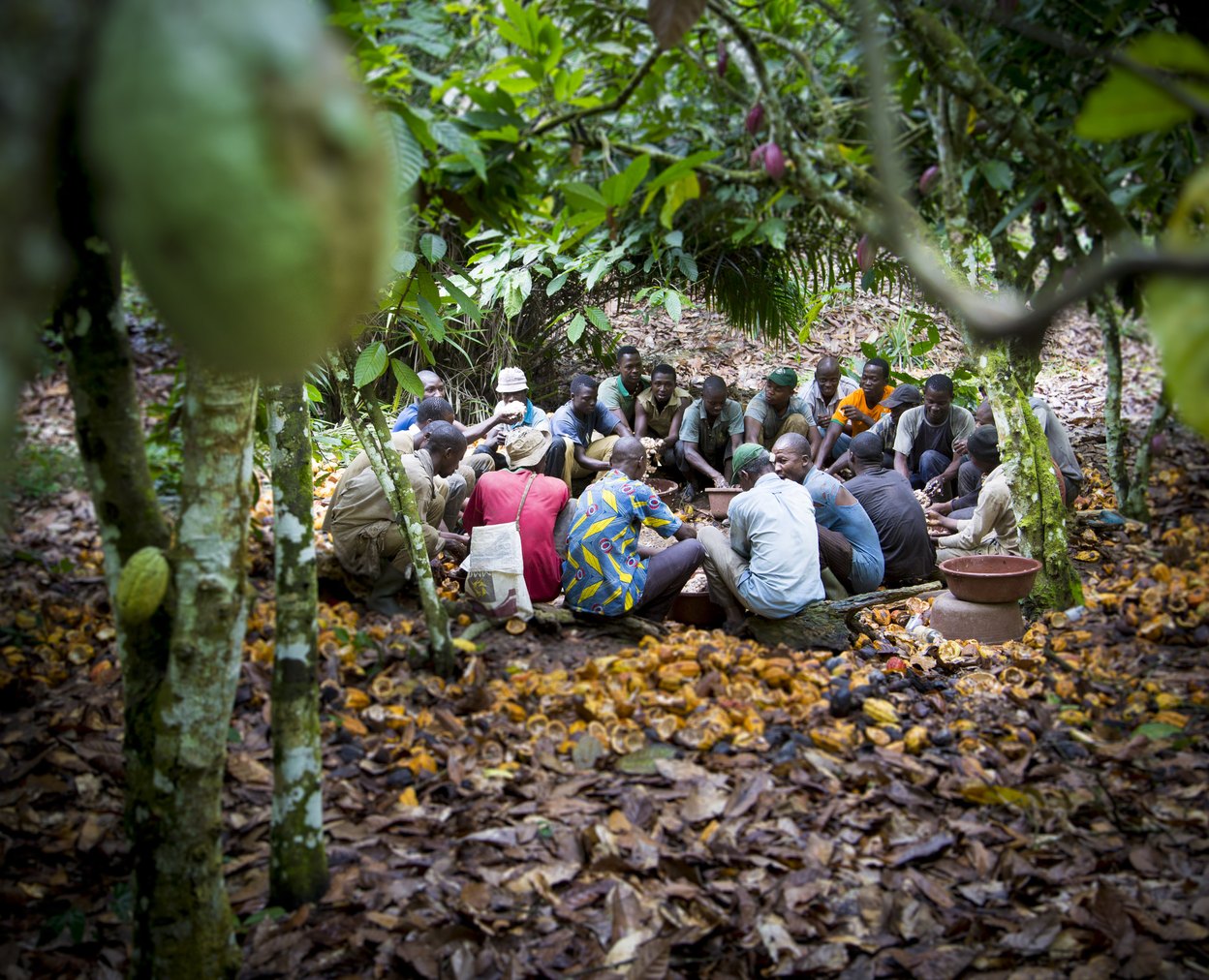
Supporting opportunities for younger generations is essential to the future of cocoa farming.

OUR LONG
TERM AMBITIONS

Transparence Cacao aims to continue strengthening community-led development approaches and support initiatives that respond to locally identified priorities.
The programme seeks to reinforce the role of local structures such as Maison du Planteur in facilitating dialogue, community engagement and locally driven action. By supporting opportunities for younger generations and strengthening community resilience, the programme aims to contribute to the long-term viability of cocoa-producing regions.

2025 INDICATORS

29
community initiatives implemented
584
people reached through Caravane Santé in 2025
2 443
people reached by Caravane Santé since 2022
5 113
children supported through educational reinforcement activities
4
community water pumps renovated since 2024

in practice

Community-led development through Maison du Planteur
In 2025, Maison du Planteur committees identified and supported local priorities ranging from education and child protection to women’s empowerment and income-generating activities. Twenty-nine community projects were implemented across participating communities.