
agroecology
WHY IT MATTERS
Healthy soils and functioning ecosystems are essential for more productive and more resilient cocoa farms.
Agroecology applies ecological principles to agricultural systems and promotes farming practices that work with natural processes. These approaches can support soil health, biodiversity and farm resilience while helping reduce dependency on external inputs where appropriate.
Agroecology applies ecological principles to agricultural systems and promotes farming practices that work with natural processes. These approaches can support soil health, biodiversity and farm resilience while helping reduce dependency on external inputs where appropriate.
OUR APPROACH
Agroecology provides the guiding framework used by Transparence Cacao to support resilient cocoa production systems.
The programme supports producer organisations and farmers in implementing practices adapted to local farming systems and environmental conditions.
Particular attention is given to soil health, responsible input management, integrated pest and disease management and the restoration of ecosystem functions within cocoa farms.
Implementation priorities vary across origins and reflect local environmental risks, opportunities and farmer needs.
The programme supports producer organisations and farmers in implementing practices adapted to local farming systems and environmental conditions.
Particular attention is given to soil health, responsible input management, integrated pest and disease management and the restoration of ecosystem functions within cocoa farms.
Implementation priorities vary across origins and reflect local environmental risks, opportunities and farmer needs.
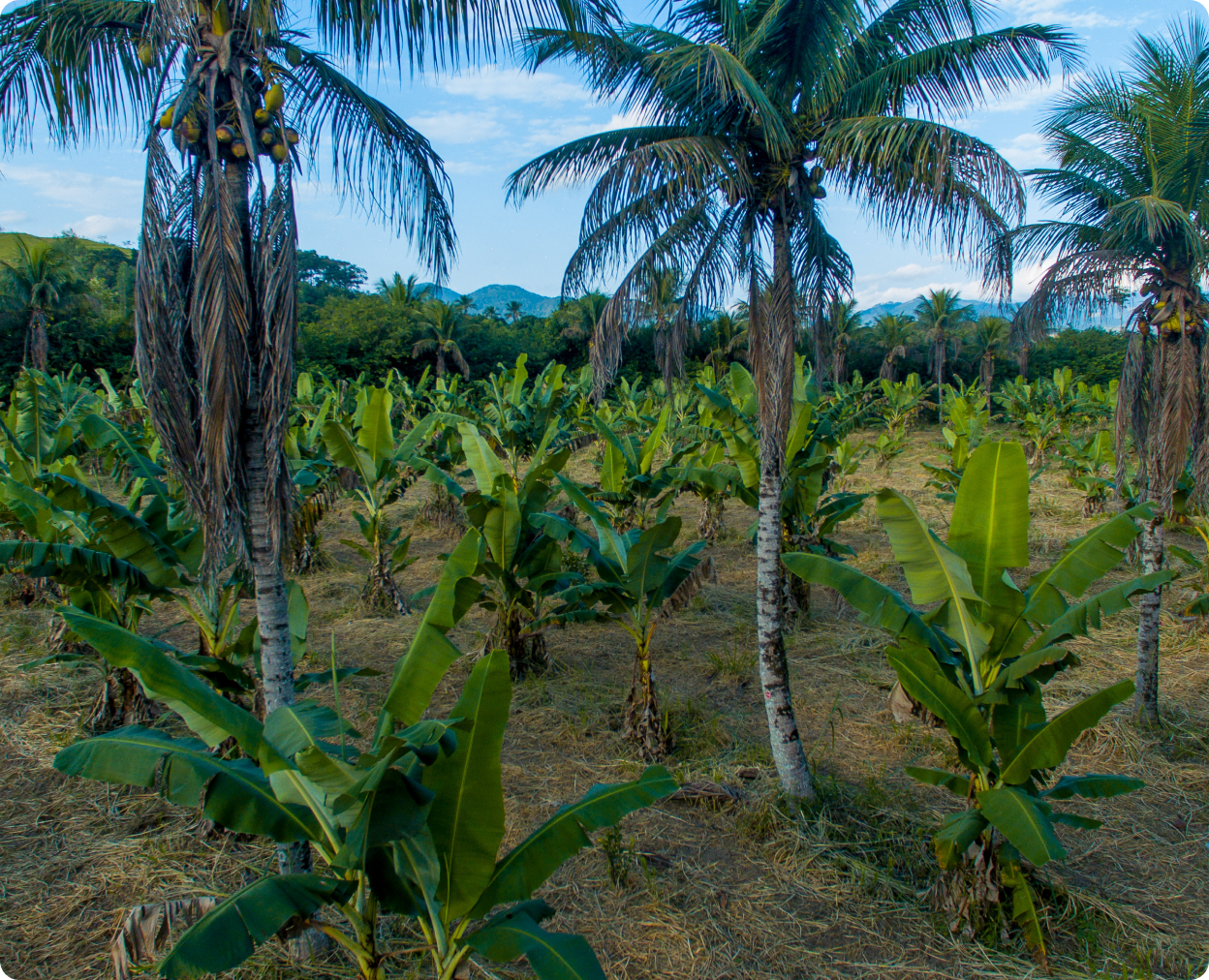


Agroecology applies ecological principles to agricultural systems and promotes farming practices that work with natural processes.
OUR LONG
TERM AMBITIONS
Transparence Cacao aims to strengthen the adoption of agroecological practices across participating origins and support the development of more resilient farming systems over time.
The programme seeks to contribute to the long-term transition towards regenerative cocoa landscapes adapted to local contexts.
The programme seeks to contribute to the long-term transition towards regenerative cocoa landscapes adapted to local contexts.
2025 INDICATORS
1,869
composting units supported
678
tonnes of compost produced
75
tonnes of biochar produced
17,465
litres of bioles distributed
in practice
Launch of the CACAO FOREST programme
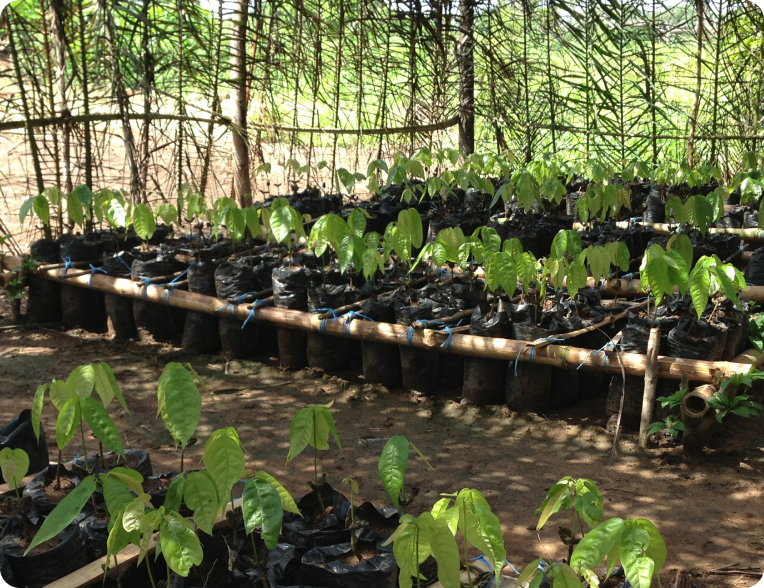
In 2025, Transparence Cacao joined the CACAO FOREST initiative in Côte d’Ivoire, a multi-partner programme focused on soil restoration, agroforestry transition and cocoa rehabilitation. Over three years, the initiative plans to support 150 farmers in agroforestry transition, 150 farmers in cocoa rehabilitation and 30 farmers in soil restoration practices while training 100 agricultural advisors.
Strengthening soil health through agroecological approaches
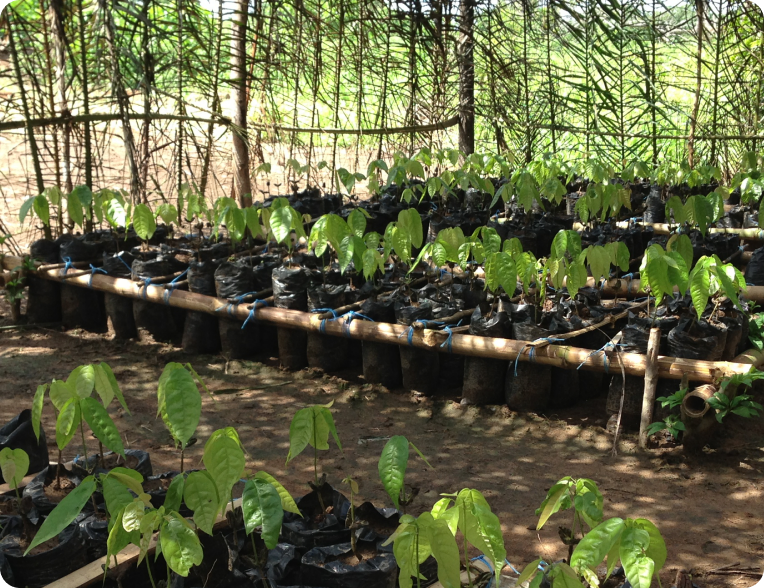
Across Peru and Ecuador, Transparence Cacao supports agroecological practices designed to strengthen soil health and support resilient cocoa production systems. Working with producer organisations and farmers, activities focus on locally adapted approaches such as composting, organic fertilisation, biological inputs and soil restoration.
In 2025, producer organisations supported the production of 678 tonnes of compost, 75 tonnes of biochar and more than 17,000 litres of bioles across participating communities. These initiatives are combined with farmer training and technical support to encourage the adoption of practices adapted to local conditions.
Recent activities have also contributed to the restoration of 523 hectares of degraded land and the strengthening of agroecological production systems through partnerships with local organisations and technical experts.
In 2025, producer organisations supported the production of 678 tonnes of compost, 75 tonnes of biochar and more than 17,000 litres of bioles across participating communities. These initiatives are combined with farmer training and technical support to encourage the adoption of practices adapted to local conditions.
Recent activities have also contributed to the restoration of 523 hectares of degraded land and the strengthening of agroecological production systems through partnerships with local organisations and technical experts.